When it comes to electronics and DIY projects, the term
Arduino for is often used to describe the purpose or application of an
Arduino board. Whether you're a beginner or an experienced maker, understanding what Arduino for means and how to choose the right kit is essential. In this article, we’ll explore the different scenarios where Arduino for is relevant, and how to make the best choice based on your needs.
What Arduino for Beginners Should I Choose?
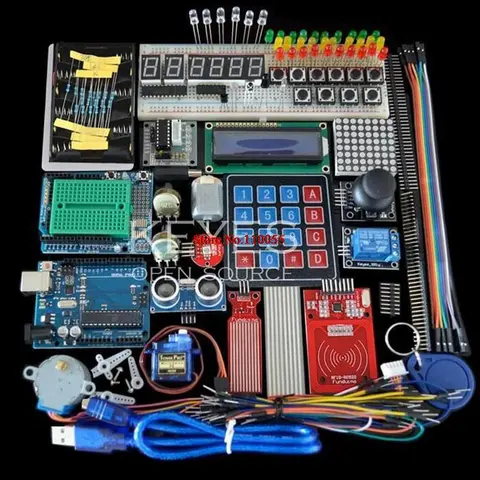
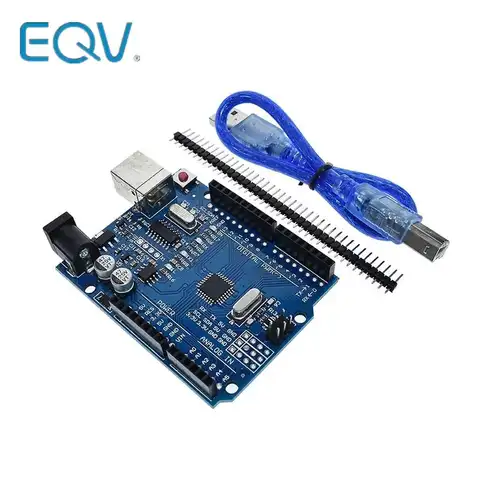
Answer first: If you're a beginner, the best Arduino for your first project is the Arduino Uno R3, paired with a starter kit that includes sensors, wires, and a breadboard. For many new users, the question is: What Arduino for beginners should I choose? The answer lies in selecting a board that is user-friendly, well-documented, and supported by a large community. The Arduino Uno R3 is the most popular choice for beginners because it offers a simple setup and is compatible with a wide range of shields and sensors.
- Arduino Uno R3
- A microcontroller board based on the ATmega328P, ideal for beginners due to its simplicity and extensive support.
- Starter Kit
- A collection of components such as sensors, LEDs, resistors, and a breadboard, designed to help beginners start building projects immediately.
- Choose the Arduino Uno R3 as your main board.
- Buy a starter kit that includes essential components like sensors, wires, and a breadboard.
- Download the Arduino IDE and install it on your computer.
- Follow a beginner tutorial, such as blinking an LED or reading a sensor value.
In my experience, the Arduino for beginners journey starts with the Uno and a well-equipped starter kit. It allows you to learn the basics of programming and electronics without getting overwhelmed by complex hardware.
What Arduino for Advanced Projects Can I Use?
Answer first: For advanced projects, the Arduino Mega 2560 or Arduino Due is recommended due to their higher processing power and more I/O pins. When working on Arduino for advanced projects, the choice of board becomes more critical. The Arduino Mega 2560 is ideal for projects that require more memory and I/O pins, such as robotics or complex sensor arrays. The Arduino Due, on the other hand, is based on a 32-bit ARM processor and is suitable for high-speed applications.
| Board | Processor | Flash Memory | I/O Pins | Recommended Use |
| Arduino Uno R3 | ATmega328P | 32 KB | 14 Digital / 6 Analog | Beginner projects |
| Arduino Mega 2560 | ATmega2560 | 256 KB | 54 Digital / 16 Analog | Advanced robotics and sensor arrays |
| Arduino Due | ARM Cortex-M3 | 512 KB | 54 Digital / 12 Analog | High-speed and complex projects |
In one of my projects, I used the Arduino Mega 2560 to control a multi-sensor weather station. The board’s large number of I/O pins allowed me to connect multiple sensors without needing additional shields.
What Arduino for Specific Applications Like IoT or Robotics?
Answer first:
For Arduino for IoT or Arduino for robotics, the Arduino Nano, Arduino MKR WiFi 1010, or Arduino Nano 33 IoT are excellent choices. When you're working on Arduino for IoT or Arduino for robotics, the board must be compact, efficient, and capable of handling wireless communication or motor control. The Arduino Nano is a small and powerful board suitable for embedded systems. The Arduino MKR WiFi 1010 and Arduino Nano 33 IoT are ideal
for Arduino for IoT due to their built-in Wi-Fi and Bluetooth capabilities.
- Arduino Nano
- A small, breadboard-friendly board based on the ATmega328P, ideal for compact projects.
- Arduino MKR WiFi 1010
- A board with built-in Wi-Fi and Bluetooth, suitable for Arduino for IoT applications.
- Arduino Nano 33 IoT
- A compact board with Wi-Fi and Bluetooth, ideal for Arduino for IoT and wearable projects.
- Choose the Arduino Nano for compact and embedded projects.
- Select the Arduino MKR WiFi 1010 or Nano 33 IoT for Arduino for IoT projects that require wireless connectivity.
- Use shields or modules to expand the board’s capabilities, such as motor drivers or sensors.
- Write and upload code using the Arduino IDE.
In a recent Arduino for IoT project, I used the Arduino Nano 33 IoT to create a smart home sensor that sent data to a cloud platform. The board’s built-in Wi-Fi made it easy to connect to the internet without additional hardware.
User Reviews of Arduino for Different Applications
Answer first: Users generally rate Arduino for various applications highly, especially for Arduino for beginners, Arduino for IoT, and Arduino for robotics. Many users have shared their experiences with Arduino for different applications. For Arduino for beginners, the Arduino Uno R3 is praised for its ease of use and extensive documentation. For Arduino for IoT, the Arduino MKR WiFi 1010 and Nano 33 IoT are highly rated for their wireless capabilities and compact design. For Arduino for robotics, the Arduino Mega 2560 is often recommended due to its large number of I/O pins and processing power. In one user review, a maker mentioned that the Arduino for IoT project was completed in just a few days using the Nano 33 IoT, thanks to its built-in connectivity features. Another user highlighted the Arduino for robotics experience with the Mega 2560, noting that the board handled multiple sensors and motors without issues.
Other Related Topics and Keywords
In addition to Arduino for, there are several other related keywords and topics that are worth exploring. These include
Arduino or,
Arduino with,
Arduino and,
Arduino language,
Arduino similar,
Arduino hardware, and
Arduino all. Each of these terms refers to different aspects of the Arduino ecosystem. For example,
Arduino or might refer to choosing between different boards or programming languages.
Arduino with could describe using Arduino with other platforms or components.
Arduino and might be used to discuss combining Arduino with other technologies like Raspberry Pi or ESP32.
Arduino language refers to the C/C++-based programming language used in the Arduino IDE. If you're interested in
Arduino similar platforms, you might explore options like Raspberry Pi, ESP32, or Micro:bit. These platforms offer similar capabilities but with different hardware and software ecosystems. In conclusion, understanding Arduino for different applications is key to choosing the right board and components for your project. Whether you're a beginner or an advanced user, there is an Arduino for every need.