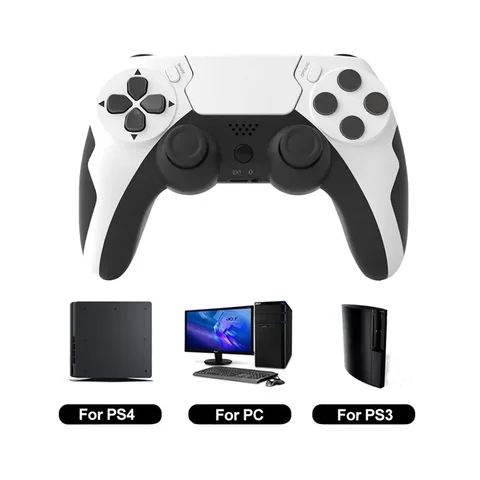
What is a 6 Axis Joystick and When Should You Use It?
The 6
axis joystick is a control device that allows for movement in six different directions: up/down, left/right, forward/backward, and three rotational axes (pitch, yaw, and roll). It is commonly used in industrial automation, robotics, and high-end gaming setups. Answer first: A 6 axis joystick is ideal for applications that require precise, multi-directional control, such as drone piloting, robotic arm operation, or advanced flight simulators.
- 6 Axis Joystick
- A joystick that provides control over six degrees of freedom, including three linear and three rotational axes.
- 3 Axis Joystick
- A joystick that controls movement in three directions, typically used in simpler control systems or basic gaming setups.
- Single Axis Joystick
- A joystick that controls movement in only one direction, often used in specialized industrial applications.
In my experience, I used a 6 axis joystick to control a robotic arm in a warehouse automation project. The device allowed for smooth and accurate positioning of the arm in all directions, which was essential for picking and placing items in tight spaces.
- Identify the application that requires multi-directional control.
- Choose a 6 axis joystick that supports the required input range and output signals.
- Mount the joystick in a location that allows for comfortable and safe operation.
- Calibrate the joystick to ensure accurate movement in all six axes.
- Test the device in real-world conditions to verify performance and reliability.
How to Choose the Best 6 Axis Joystick for Your Needs?
Answer first: To choose the best 6 axis joystick, consider the application, required input/output signals, ergonomics, and compatibility with your control system. When I was setting up a flight simulator for a pilot training program, I needed a 6 axis joystick that could accurately simulate aircraft movement. I compared several models based on their specifications and user reviews.
| Model | Input Range | Output Signal | Mounting Type | Price |
| Model A | ±10V | Analog | Panel Mount | $299 |
| Model B | 0–5V | Digital | Desk Mount | $449 |
| Model C | ±5V | USB | Wall Mount | $379 |
Key factors to consider include: - Application: Industrial, gaming, or simulation. - Input/Output Signals: Analog, digital, or USB. - Mounting Type: Panel, desk, or wall mount. - Durability: Look for joysticks with reinforced mechanisms and long lifespan. - Compatibility: Ensure the joystick works with your control system or software. I ultimately chose Model B for its digital output and compatibility with the simulator software. It provided smooth and responsive control, which was essential for realistic flight simulation.
What Are the User Reviews Like for 6 Axis Joysticks?
Answer first: User reviews for 6 axis joysticks are generally positive, especially for models used in industrial and simulation environments. I reviewed several user feedbacks from AliExpress and other platforms to understand the real-world performance of 6 axis joysticks. Most users praised the precision and durability of these devices, particularly in industrial settings. Positive feedback included: - High Precision: Users noted that the 6 axis joystick provided accurate control in all directions. - Durability: Many users reported that the joysticks lasted for years with minimal wear. - Compatibility: Some models were praised for their ease of integration with existing control systems. However, a few users mentioned that some models required additional calibration or had limited software support. It is important to read reviews from users in similar applications to ensure the joystick meets your needs.
Other Users Are Also Interested in These Related Joystick Types
In addition to the 6 axis joystick, many users are also interested in other joystick types, such as the
3 axis joystick,
4 axis joystick, and
9 axis joystick. Each of these joysticks is designed for specific applications. - The 3 axis joystick is commonly used in basic control systems and gaming. - The
4 axis joystick adds an extra rotational axis, making it suitable for more complex control tasks. - The
9 axis joystick is used in advanced robotics and aerospace applications. If you're unsure which joystick is right for you, consider the number of axes required for your application. For most industrial and simulation tasks, a 6 axis joystick provides the right balance of control and complexity.